
She Paid $1 Million to Join a Senior Facility. Its Bankruptcy Wiped Her Out.
Families have lost at least $190 million in 16 bankruptcies at continuing-care retirement communities
By Akiko Matsuda
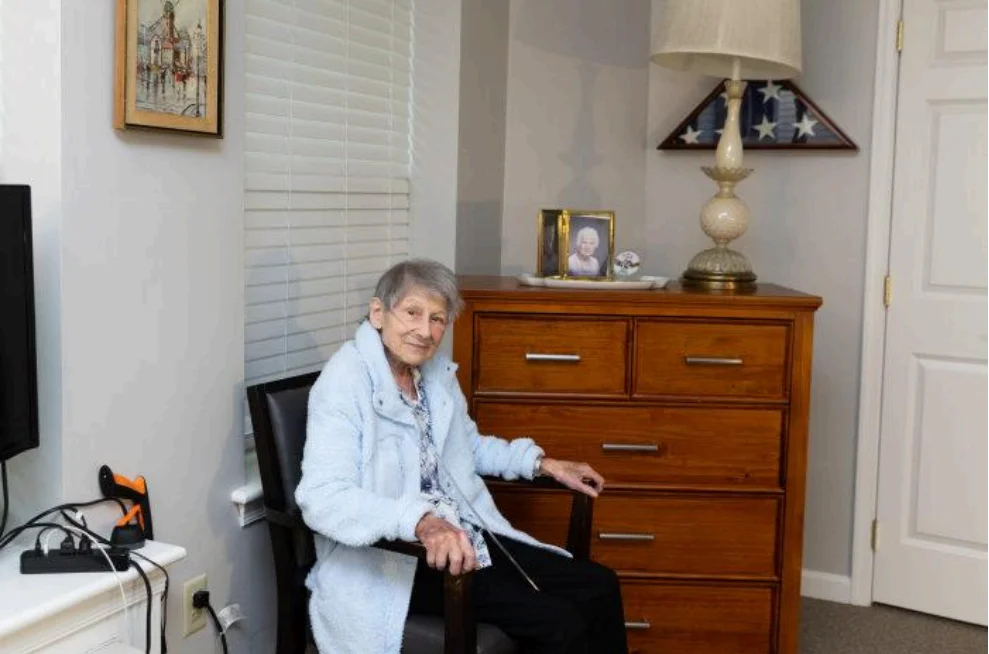
Arlene Kohen in her new home at Sunrise Senior Living in Plainview, N.Y. She had to leave Harborside in Port Washington, N.Y., in its third bankruptcy. Photo: Jackie Molloy for WSJ
Arlene Kohen was 89 years old and recently widowed when she moved to the Harborside continuing-care retirement community in Port Washington, N.Y., in January 2020. The facility on Long Island offered independent living units, along with skilled nursing, memory care and assisted living.
Getting in wasn’t cheap.
Harborside required a $945,000 entrance fee, a standard in the industry. On top of that, Kohen was paying $5,700 in monthly fees by the end of her stay. Kohen sold the family house in Great Neck, N.Y., for $838,000 to help cover entry. Harborside told her that 75% of that upfront fee would be refundable to her family upon her death, or returned to her if she chose to leave, also a typical practice in the industry.
Harborside struggled to recruit residents and went bankrupt three times. Finally, the owner sold the business to an investor who is scaling back on the level of care offered. Kohen needed more care, so she had to leave.
But because of the way bankruptcy proceedings work, secured creditors get paid before residents.
Kohen’s family expects to get back less than one-third of the $710,000 refund the facility promised her.
“That’s money that I’ll never see,” said Beverly Kohen Fried, Kohen’s daughter.

Beverly Kohen Fried visits with her mom, Arlene Kohen. Photo: Jackie Molloy for WSJ
Among nearly 2,000 of these types of facilities nationwide, at least 16 of them have filed for chapter 11 since the outbreak of Covid-19 in March 2020, according to a Wall Street Journal review of court filings and Gibbins Advisors, a healthcare restructuring advisory firm.
Chapter 11 filings rose during the pandemic period primarily because these facilities didn’t have enough new move-ins. Those 16 bankruptcies wiped out more than 1,000 families’ savings totaling at least about $190 million accumulated over decades, based on the Journal’s analysis; 212 of those families were in Harborside, a Harborside lawyer said at a May bankruptcy-court hearing.
Representatives for Harborside didn’t respond to requests for comment.
Curt Schaller, principal of the Chicago-based investor Focus Healthcare Partners, which recently bought Harborside out of bankruptcy, said he is “sympathetic to the situation,” but said his firm has no say in how the sale proceeds are divided between bondholders and residents.
About 623,000 people lived in continuing-care retirement-community facilities as of 2023, according to the nonprofit National Investment Center for Seniors Housing & Care.
The facilities offer a range of services and levels of care. Residents can live independently in apartments usually set on expansive campuses with fitness centers and classes. As they age and need more help, they can transition to healthcare units. In exchange, they pay steep entrance fees.
Many of these entrance-fee-based businesses use the upfront cash to service debts or fund operations, while maintaining modest reserves. New residents often rely on selling their homes to raise money for the entrance fees.
During periods when prospective residents can’t easily sell their homes, these communities can struggle to attract new customers and become financially vulnerable. That is what happened at Harborside.
Retirement homes offering continuing care began more than a century ago within religious communities that wanted to serve their retired workers. After the Internal Revenue Service granted these facilities tax-exempt nonprofit status in the 1970s, they grew rapidly.
Most of these businesses nationwide are now owned by nonprofits, often taking advantage of tax-exempt bonds to build large campuses.
The cash from entrance fees frequently goes toward paying down part of the construction debt. About half of these entrance-fee-based facilities relied on upfront payments for their day-to-day operations in 2023, according to a recent analysis by CARF International, which accredits life-plan communities.
SHARE YOUR THOUGHTS
Have you or your family been affected by the bankruptcy of a continuing-care
retirement facility? Join the conversation below.
Several high-profile bankruptcies during the 2008-09 financial crisis led the U.S. Senate Special Committee on Aging to investigate continuing-care retirement communities in 2010. It concluded that those businesses are “particularly vulnerable during economic downturns” because of their ties to the housing market.
The committee called on state regulators to beef up their oversight to protect consumers. Many states, however, have struggled to regulate these businesses. That is, in part, because of their unique insurance-like business model, under which fees are collected for future services, said Katherine Pearson, a law professor at Pennsylvania State University’s Dickinson Law.
“You need expertise that’s equivalent of insurance commissioners’ expertise if you’re going to regulate that,” Pearson said. That is something most states lack, she added. Florida regulates continuing-care communities as a specialty insurance product. But the state failed to prevent roughly 100 seniors from losing their homes and life savings when Unisen Senior Living in Tampa filed for bankruptcy last year and shut down the facility.
Representatives for Unisen didn’t return requests for comment.
The incident prompted the state insurance commissioner’s office to seek legislative amendments for stronger consumer protection. But state lawmakers withdrew the bills after industry advocates said that the change would increase fees for seniors.
Harborside faced challenges from the start. It opened in 2010, shortly after the subprime housing crisis. That made it hard for prospective residents to sell their homes to pay entrance fees ranging between $425,000 and $1.7 million to move into the six-story, 500,000-square-foot luxury complex.
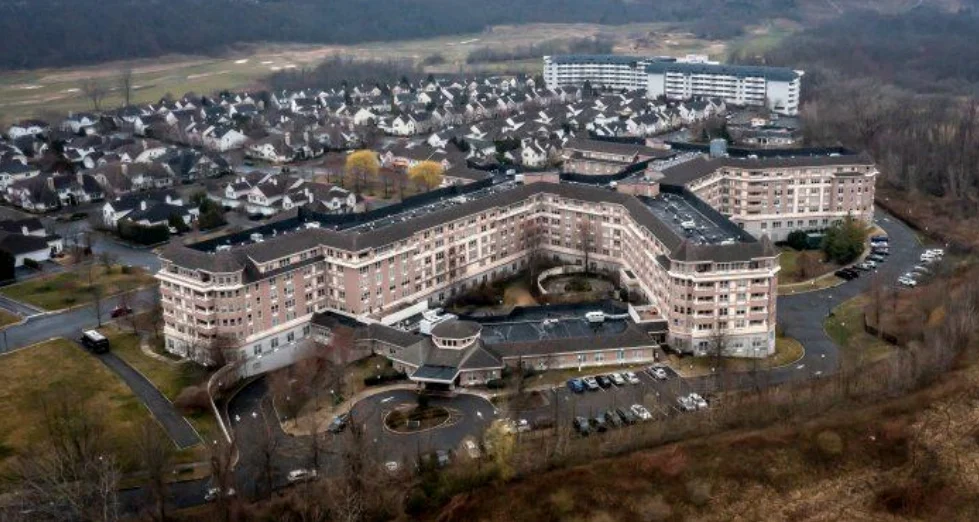
Harborside struggled to recruit residents and went bankrupt three times. Photo: J. Conrad Williams Jr./Newsday RM/Getty Images
The community filled less than 60% of its 229 independent-living units in two years. Its owner, a nonprofit subsidiary of the Amsterdam Continuing Care Health System, had banked on initial entrance fees to pay down $120 million of the community’s $296 million construction bonds. The plan didn’t work, and the community filed its first bankruptcy in 2014.
Although occupancy stabilized in subsequent years, the pandemic brought new move-ins to a standstill. The business filed for bankruptcy again in 2021. While the bankruptcy code empowers filers to reject contracts and wipe out unsecured claims, residents were unaffected during the first two bankruptcies because bondholders supported its financial restructuring.
The owner defaulted again on the bonds in late 2022. State regulators were aware of the problem but lacked the authority to intervene. Under the new ownership, existing residents can remain in their independent-living units and pay monthly fees. But they no longer have a long-term-care guarantee, and most of those who need that assistance ended up leaving.
Out of about 210 current and former residents, 187 have accepted the chapter 11 plan that aims to return them up to 32% of their entry fees, totaling around $121 million.
The loss of long-term care at Harborside forced Bob Curtis, 88 years old, to move his wife, Sandy Curtis, to a new memory-care facility in February.
Sandy, 85 years old, died in April due to complications triggered by fall-related injuries.
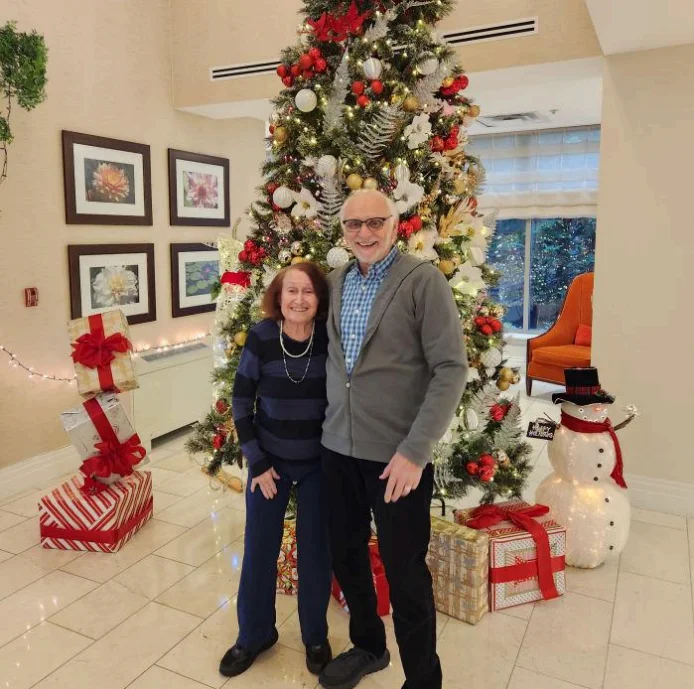
Bob Curtis with his wife, Sandy Curtis, at Harborside in Port Washington, N.Y., last year. Photo: Bob Curtis
Curtis remains in Harborside’s one-bedroom apartment. He paid an $840,000 entrance fee on a 50% refund plan. By this fall, he is hoping to receive an initial refund check of roughly $50,000 from the bankruptcy estate.
The rest of his refund, as much as $100,000, could take months to arrive as it is tied to the sale of the Amsterdam Nursing Home in Manhattan, a separate asset owned by Harborside’s parent company.